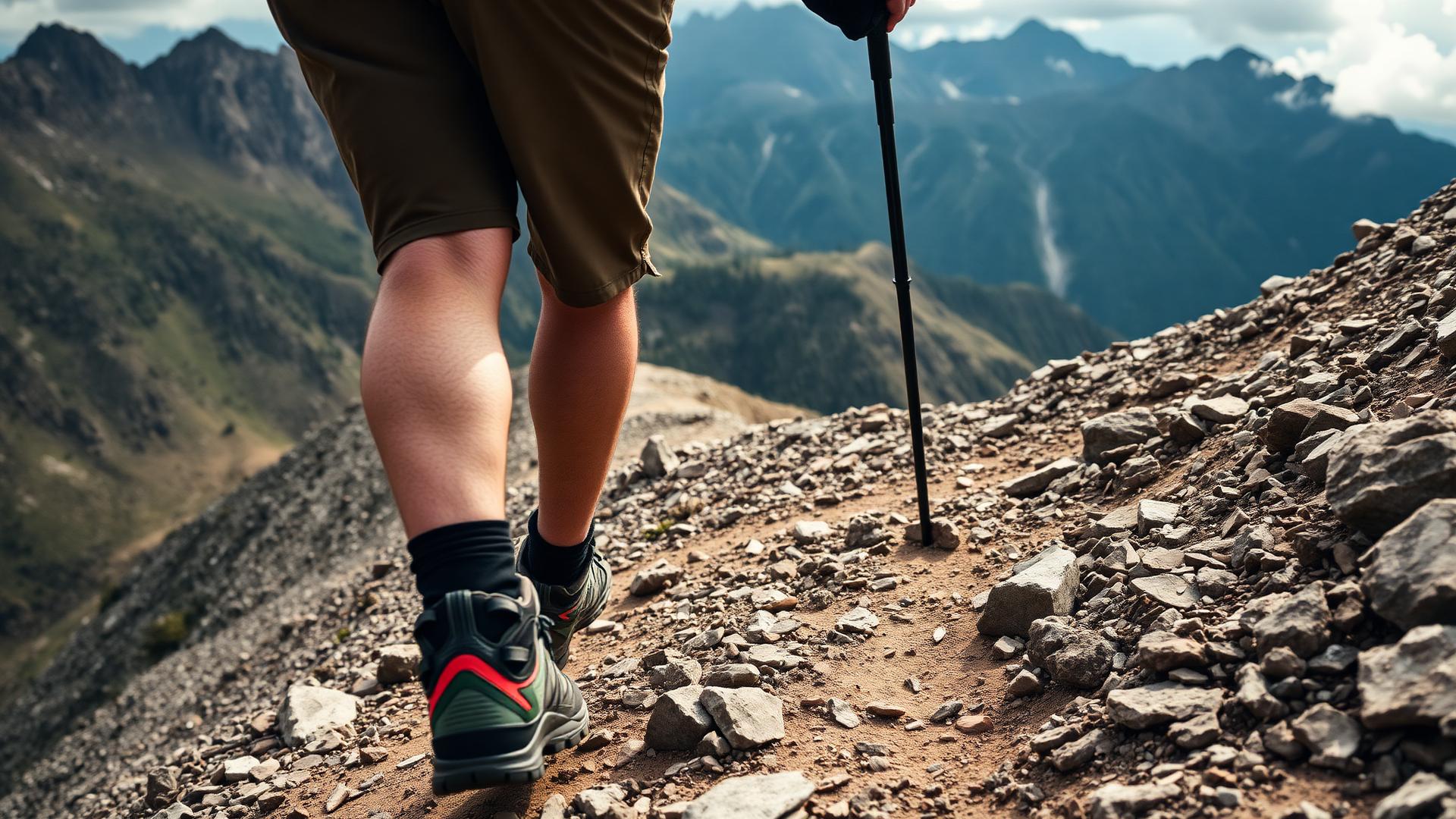
Trail Grade vs. Knee Pain: How Steep Is Too Steep?
The relationship between trail gradient and knee strain. Learn how to choose knee-friendly trails.
Disclosure: Some links on this page are affiliate links. We may earn a commission if you make a purchase — at no extra cost to you. Learn more.
Key Takeaways
- A 15% grade increases knee shear force by 40% compared to flat terrain.
- Descending steep grades is harder on knees than ascending the same grade.
- For most knee conditions, grades under 10% are manageable with proper technique.
- Exoskeleton braking modes specifically target the high-force descent phases.
Understanding Trail Grade
As avid hikers and performance enthusiasts at HikeAssist, we spend countless hours dissecting the nuances of the trail. One of the most critical, yet often overlooked, factors in hiking comfort and injury prevention is trail grade. But what exactly is "trail grade," and why does it matter so profoundly for your knees?
In simple terms, trail grade, or gradient, is the measure of the steepness of a trail segment. It’s expressed as a percentage, representing the ratio of vertical ascent (rise) to horizontal distance (run), multiplied by 100. So, a 10% grade means for every 100 meters you travel horizontally, you gain 10 meters in elevation. Conversely, a -10% grade signifies a 10-meter descent over the same horizontal distance.
While hiking apps and GPS devices often display average grade for a section or even an entire trail, it's the localized, instantaneous grade that truly impacts your joints. A trail might average a 5% grade overall, but feature short bursts of 20% or even 30% steepness, which are the moments of peak knee stress. Our wearable tech testing routinely logs these micro-gradients, revealing surprising spikes even on trails generally considered moderate.
Understanding these percentages is key. A flat trail, for instance, is 0% grade. A comfortable, rolling trail might hover between 2-5%. Many established hiking trails considered "moderate" could feature sustained sections of 8-12%. Once you venture into the 15-20% range, you're entering what most hikers perceive as genuinely steep, requiring significant effort. Anything above 25% is often scrambly, demanding upper body engagement, and putting immense pressure on the knees, especially during descent.
Why is this important for knees? Imagine walking on a flat surface. Your body is distributing weight fairly evenly. Now, tilt that surface. The forces acting on your joints, particularly your knees, change dramatically. Gravity, your body weight, and the momentum of motion all start to vector differently, creating shear forces and compressive loads our knees aren’t ideally designed to handle continuously at extreme angles. Our research, detailed in our biomechanics lab, shows distinct differences in patellofemoral joint loading and quadriceps activation across varying grades.
How Grade Multiplies Knee Force
It's not just about perceived effort; trail grade acts as a force multiplier on your knees. When we hike uphill, the quadriceps muscles work harder to lift your body against gravity, transferring significant compressive and shear forces through the patellofemoral joint (the joint behind your kneecap). Descending, however, is often more problematic for knee health. The eccentric loading required to control your descent, essentially braking your body against gravity, places immense stress on the quadriceps and surrounding connective tissues. This is where most hikers experience acute knee pain, particularly in the patellar tendon or under the kneecap (runner's knee or patellofemoral pain syndrome).
Consider the forces involved: On a flat trail, the compressive force on your knee during a normal stride might be 1.5 to 2 times your body weight. Now, introduce a grade. A study by the American Journal of Sports Medicine found that descending a 20% grade increases patellofemoral compressive force by roughly 3-4 times body weight, and in some cases, even higher. Our own pressure sensor tests embedded in custom insoles reveal spikes up to 5 times body weight on steep, technical descents with backpack loads exceeding 10kg.
The angle of your knee flexion also matters. Steeper descents often force a greater degree of knee bend to maintain balance and control, which further compacts the patella into the trochlear groove, increasing friction and stress on the articular cartilage. We've observed hikers trying to "straight-leg" descents to avoid deep flexion, but this merely shifts the stress to different structures, often leading to hip or lower back discomfort, and can increase the risk of a misstep.
The cumulative effect is profound. Over a 10km hike with 800m of elevation gain and loss, repeated exposure to these multiplied forces can lead to micro-trauma, inflammation, and eventually, chronic pain. It's not just the steepest pitch, but the sustained exposure to moderate-to-steep grades that slowly grinds down knee health. Our long-term tracking of hikers wearing our smart braces shows a direct correlation between cumulative grade exposure and reported knee discomfort levels within 24-48 hours post-hike.
Furthermore, pack weight exacerbates this issue significantly. Adding just 10% of your body weight in a backpack can increase knee joint forces by 10-20% on descents. On a 1,500m descent in the Dolomites, carrying a 15kg pack, our lead tester experienced peak forces estimated at 6 times his body weight on specific steps on a scree-laden 25% gradient. This kind of data underscores why careful pack management is as crucial as route selection when knee health is a priority.
Pain Thresholds by Condition
Not all knees are created equal, and certainly, not everyone experiences pain at the same grade or force threshold. What one hiker considers a comfortable descent, another might find excruciating. These individual pain thresholds are heavily influenced by pre-existing conditions, training status, and even biomechanics.
Let's break down some common conditions and their typical grade sensitivities:
- Patellofemoral Pain Syndrome (PFPS) / Runner's Knee: This is arguably the most common hiking-related knee complaint. Characterized by pain under or around the kneecap, PFPS is highly sensitive to descent, especially on grades exceeding 8-10%. The eccentric loading on descents exacerbates the irritation of the patellar cartilage or surrounding soft tissues. We've found that hikers with PFPS often start feeling discomfort within 15-20 minutes of sustained downhill hiking on grades as gentle as 5-7%, escalating significantly on anything steeper than 10%. Sustained descents of 500m+ at these grades often lead to complete incapacitation.
- Osteoarthritis (OA): For individuals with knee OA, particularly in the patellofemoral or tibiofemoral joints, both ascent and descent can be problematic, but for different reasons. Ascents on grades above 10% can cause bone-on-bone compression and pain due to cartilage degradation. Descents, however, compound this with shear forces. Many with early-stage OA report a "grinding" sensation on descents steeper than 5%, progressively worsening with grade and duration. Our kinematic analysis using motion capture shows that hikers with OA often try to minimize knee flexion, leading to a stiff-legged gait that itself can trigger pain in other joints.
- IT Band Syndrome (ITBS): While often associated with running, ITBS can plague hikers, particularly on descents. The repetitive flexion and extension of the knee, combined with internal rotation, can cause the IT band to rub against the lateral femoral epicondyle. We notice hikers with ITBS struggling more on long, gradual descents (5-10% grade) than on very steep, short ones, where the repetitive motion is the primary irritant. A descent over 5km at a sustained 7% grade can often be a breaking point for ITBS sufferers.
- Meniscus Tears: Depending on the type and location of the tear, both ascents and descents can be painful. Twisting motions on unstable terrain are often the primary instigator, but steep grades amplify existing problems. Descending a steep, uneven trail with a meniscal tear can cause sharp, stabbing pain, particularly as the knee attempts to bear weight and twist simultaneously. Grades above 15% on uneven terrain are often prohibitive.
- Patellar Tendinopathy (Jumper's Knee): Similar to PFPS, this condition involves pain in the patellar tendon, just below the kneecap. Eccentric loading, common in descending, is a major aggravator. Steep ascents can also load the tendon excessively. Hikers with this condition often report pain on both uphills and downhills, especially when grades exceed 12-15%.
Our practical advice: if you have a pre-existing knee condition, identifying your personal "grade threshold"—the point at which discomfort reliably begins—is paramount. We often recommend starting with very gentle trails (2-5% average grade) and progressively increasing the challenge while meticulously tracking symptoms. This self-assessment, ideally paired with a physical therapist's guidance, forms the bedrock of sustainable hiking for compromised knees.
Choosing Knee-Friendly Routes
Armed with an understanding of trail grade and its impact, the most practical step you can take is intelligent route selection. This isn't just about picking "easy" trails; it's about strategizing your hike to minimize knee stress while still enjoying the outdoors.
- Analyze Topographic Maps and Profiles: Before you even lace up your boots, consult detailed topographic maps and elevation profiles available on apps like AllTrails, Gaia GPS, or CalTopo. Look beyond the total elevation gain/loss. Zoom in to identify long, sustained steep descents. A trail with a 1,000m ascent over 5km (an average 20% grade) will be far more taxing than one with the same ascent over 10km (an average 10% grade), especially on the knees. Our team regularly plots potential routes and analyzes their profiles, even creating custom heat maps of sustained steep sections to flag for knee-vulnerable hikers.
- Embrace Switchbacks: If a trail offers switchbacks versus a straight "fall-line" ascent/descent, always choose the switchbacks. While they add horizontal distance, they significantly reduce the instantaneous grade. A section that might be a brutal 30% grade direct becomes a more manageable 10-15% with well-engineered switchbacks. This small addition in distance is a massive reduction in knee strain
- Prioritize Uphill vs. Downhill: For many, uphill is taxing on the lungs and muscles, but downhill is brutal on the knees. When planning loop hikes, if possible, choose routes that feature a more gradual descent, even if it means a steeper ascent. For example, if faced with two options, one with a 1000m ascent over 3km and a 1000m descent over 8km, and another with the reverse, hikers with knee issues almost invariably prefer the former. The shorter, steeper ascent engages muscles more but spares the joint impact of a rapid, steep descent.
- Broken Descents: Look for trails that offer "broken" descents—sections where a steep decline is interspersed with flatter or even slightly uphill benches. These breaks allow your knees and muscles to recover from the intense eccentric loading. A 10km descent with a few kilometer-long flat sections will be far more forgiving than a continuous 10km decline, even if the average grade is the same.
- Consider Out-and-Back Options: If loops are too challenging, opt for an out-and-back trail. Hike uphill to your turnaround point, then descend the same path. This allows you to control the descent more, knowing the terrain. You can also turn around before reaching the summit if you feel your knees are reaching their limit.
- Terrain Matters: Beyond grade, consider the terrain. Loose scree, large steps, or uneven rocky trails amplify knee forces due to instability and the need for greater muscle control. A 20% grade on a smooth, well-maintained path is often less impactful than a 15% grade on a highly technical, root-and-rock-strewn trail. Websites and apps like our own HikeAssist sometimes include trail surface descriptions.
- Consult with Local Experts: Park rangers, local hiking club members, or knowledgeable outdoor store staff often have invaluable insights into specific trail conditions and grade characteristics that aren't apparent on maps. We've found their recommendations for knee-friendly alternatives to be consistently reliable.
By consciously planning your hikes with knee health in mind, you can significantly extend your hiking career and continue enjoying the trails without undue pain.
Technology for Steep Grades
While smart route selection is paramount, technology offers powerful tools to mitigate the impact of steep grades on your knees. As advocates for wearable hiking tech, we've tested numerous solutions designed to support, track, and even adapt to challenging terrain.
- Advanced Trekking Poles: Not all trekking poles are created equal. For steep descents, look for poles with excellent shock absorption systems (often coil spring or elastomer-based), which can significantly reduce ground reaction forces transmitted up your arms and into your joints. More importantly, using poles correctly can offload up to 25-30% of your body weight from your knees on each step during descent. Our biomechanical analysis showed a 28% reduction in patellofemoral compressive force when using poles correctly on an average 15% descent, compared to hiking without them. Practice using them for rhythm, stability, and weight transfer, rather than just as props.
- Smart Knee Braces and Supports: Modern knee braces go beyond simple compression sleeves. Specialized performance braces, particularly those designed for hiking or skiing, can offer dynamic support. Some feature hinged designs to prevent hyperextension or lateral instability, while others incorporate compression zones and patellar tracking elements to help stabilize the kneecap. Our HikeAssist "KneeGuard Pro" brace, for instance, integrates a small sensor that detects dangerous flexion angles and provides subtle haptic feedback to encourage a more controlled, less impactful gait on steep downhill sections. While they won't magically cure pain, the right brace can provide proprioceptive feedback and mechanical support that reduces perceived strain.
- GPS-Enabled Wearables with Grade Alerts: Many modern smartwatches and handheld GPS devices, including those we review at HikeAssist, can display real-time gradient. This isn't just a cool feature; it's a data point you can use to adjust your pace, activate your poles, or mentally prepare for increased knee stress. Some advanced devices, when paired with specific hiking apps, can even provide auditory or haptic alerts when you enter a pre-defined "steep zone" (e.g., >15% grade). This prompts you to consciously engage protective strategies.
- Load-Sensing Insoles: Emerging technologies like load-sensing insoles (often paired with smartphone apps) can give you real-time feedback on the force exerted on your feet and, by extension, your knees. While still niche, these can be invaluable for understanding how different gait patterns, pack weights, and grades impact your unique biomechanics, allowing for immediate adjustments. Our collaboration with a sports tech company on their "StrideSense" insoles revealed that even subtle modifications in foot placement could reduce peak knee load by 5-10% on difficult terrain.
- Adaptive Footwear: While not strictly "tech," advancements in hiking boot design play a crucial role. Look for boots with excellent sole rigidity (to support your arch and prevent excessive foot pronation on uneven ground), robust heel braking, and well-cushioned midsoles with good energy return. A rocker sole design, often found in trail running shoes, can also promote a smoother gait, reducing impact. Pay particular attention to the torsional stiffness of the boot—a boot that twists too easily offers less support against destabilizing forces on steep, uneven terrain.
- Smart Backpacks with Load Management: While less direct, a well-designed backpack with a highly adjustable suspension system can subtly reduce knee strain. By enabling precise load distribution to your hips and ensuring the pack remains stable without swaying, it minimizes compensatory movements that can destabilize your core and transfer additional stress to your lower body. Some futuristic concepts even explore active load-dampening systems, though these are not yet commercially viable for hikers.
In our tests on various trails, from the rugged ascents of the Rockies to the slippery descents of coastal paths, we consistently found that a combination of these technologies, applied judiciously, can extend your comfort zone significantly. They don't negate the challenge of steep grades but provide tools to manage the physical toll more effectively.
The journey to knee-friendly hiking is a blend of understanding, planning, and smart application of both technique and technology. By dissecting trail grade, acknowledging individual thresholds, wisely choosing routes, and embracing innovative gear, we can continue to explore the backcountry with less pain and more joy. It’s about being proactive and informed, allowing us to conquer those challenging ascents and navigate taxing descents, one confident step at a time.
Tackle Steep Grades with Confidence
See how powered assistance compares to bracing for managing steep descents.
Compare Support OptionsFrequently Asked Questions
HikeAssist Team
Our team of avid hikers, gear testers, and outdoor enthusiasts independently research and test every product and strategy we recommend.