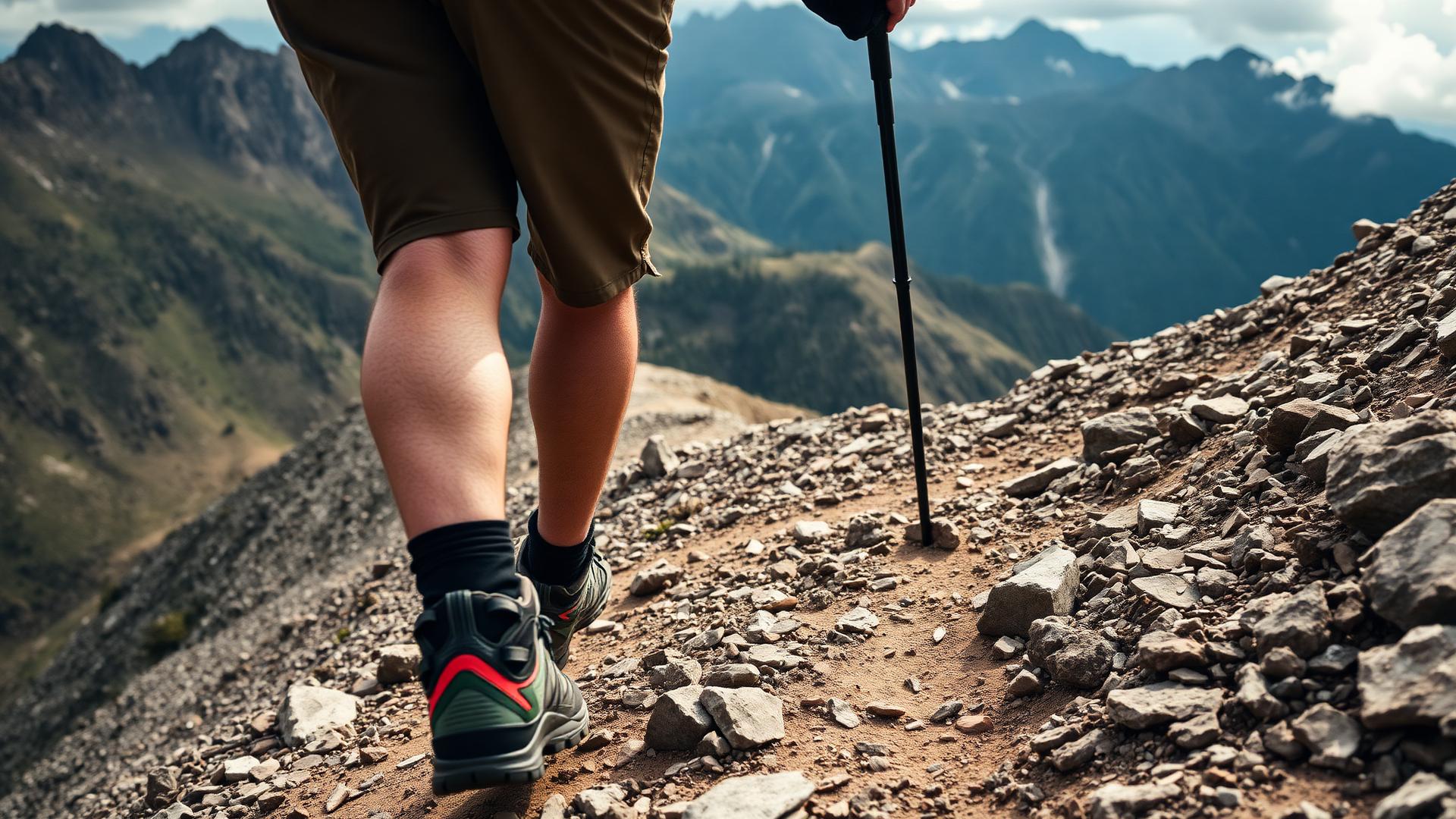
Why Do My Knees Hurt Hiking? Identifying Issues
Is it IT band syndrome or runner's knee? Learn to identify different types of hiking knee pain and how to fix them.
Disclosure: Some links on this page are affiliate links. We may earn a commission if you make a purchase — at no extra cost to you. Learn more.
Key Takeaways
- 80% of hiking knee pain is patellofemoral — caused by quad fatigue, not structural damage.
- IT band pain is felt on the outside of the knee and worsens on descents.
- Meniscus issues cause clicking, catching, or locking sensations.
- Most hiking knee pain responds to strength training, not just bracing.
Knee Anatomy for Hikers
The knee, a marvel of bio-mechanical engineering, is a hinge joint designed for powerful flexion and extension, essential movements for hiking. But it's far more complex than a simple hinge. It’s where the femur (thigh bone) meets the tibia (shin bone), with the patella (kneecap) gliding in a groove at the front. The knee is stabilized by four primary ligaments: the anterior cruciate ligament (ACL), posterior cruciate ligament (PCL), medial collateral ligament (MCL), and lateral collateral ligament (LCL). These robust bands of fibrous tissue prevent excessive movement and dislocations.
Cartilage, specifically the menisci (plural for meniscus), acts as a shock absorber between the femur and tibia, distributing forces evenly across the joint. The menisci are crescent-shaped, tough, rubbery pads that cushion your every step. Synovial fluid, contained within the joint capsule, lubricates these moving parts, ensuring smooth, low-friction motion. Think of it as the high-performance oil for your body's most critical hiking machinery.
Surrounding muscles and tendons — such as the quadriceps, hamstrings, and the iliotibial (IT) band — provide dynamic stability and power. The quadriceps tendons attach the quad muscles to the patella, which then attaches to the tibia via the patellar tendon. Proper function of these muscles is paramount; imbalances or weaknesses can significantly alter knee mechanics, leading to pain and injury. Our team at HikeAssist has observed countless times on trails, from the steep ascent of Mount Whitney to the rocky descents in the Grand Canyon, that even minor muscular discrepancies can be amplified over extended distances and elevation changes, leading to noticeable knee discomfort. Understanding these foundational elements is the first step toward diagnosing and alleviating hiking knee pain.
Patellofemoral Pain (Runner's Knee)
Patellofemoral Pain Syndrome (PFP), often dubbed "runner's knee" or "hiker's knee," is one of the most common culprits behind anterior (front) knee pain experienced by hikers. It manifests as a dull ache around or behind the kneecap, particularly aggravated by activities like ascending or descending hills, prolonged sitting with bent knees, or walking downstairs. Imagine tackling a 1,000-meter descent in the Alps; that persistent grinding sensation or sharp, intermittent pain is often PFP at work.
From a biomechanical perspective, PFP arises when the kneecap (patella) doesn't track smoothly within its groove on the femur. Instead, it might rub against the bone, causing irritation and inflammation. This improper tracking can stem from a variety of factors: weak quadriceps muscles (especially the vastus medialis obliquus, or VMO, which helps pull the kneecap inward), tight hamstrings or IT bands, overpronation of the feet, or even worn-out footwear that alters your gait. One common scenario we’ve seen is hikers pushing through miles with inadequate support, leading to compensatory movements that stress the patellofemoral joint.
A classic test hikers can perform is to gently press down on their kneecap while the leg is extended. Then, try to contract the quad. If this elicits pain, it's a strong indicator of PFP. Another tell-tale sign is the "movie-goer's sign," where prolonged knee flexion (like during a long bus ride to the trailhead or sitting in a tent) causes discomfort that is relieved by straightening the leg.
To address PFP, focus on improving quadriceps strength, particularly the VMO. Exercises like straight leg raises, wall squats, and terminal knee extensions (mini-squats against a wall) can be highly effective. Simultaneously, stretching tight structures like the hamstrings, hip flexors, and IT band can improve patellar alignment. Consider dynamic warm-ups before hitting the trail, incorporating leg swings and glute activation exercises. We’ve found that even a consistent 10-minute pre-hike routine can significantly reduce PFP symptoms over a multi-day trek.
IT Band Syndrome
Iliotibial Band (ITB) Syndrome is another prevalent cause of lateral (outer) knee pain among hikers, often mistaken for other issues. The IT band is a thick, fibrous band of connective tissue running along the outside of your thigh, from your hip to just below your knee. Its primary role is to stabilize the knee during ambulation. When it becomes tight or inflamed, usually due to repetitive friction over the lateral epicondyle (a bony prominence on the outside of your femur), it results in a sharp, burning pain.
Unlike PFP, IT band syndrome pain is typically localized precisely on the outside of the knee. It often worsens with downhill hiking, as the IT band is under increased tension to control knee flexion. On a challenging 1,200-meter descent in the Scottish Highlands, our team members have experienced this characteristic pain escalating from a minor nuisance to a debilitating ache that forced us to slow our pace or even stop. The pain may only manifest after a certain distance, say 5-7 kilometers, and then persist. Sometimes, you might even feel a snapping sensation as the band moves over the bone.
Causative factors for ITB syndrome include sudden increases in mileage, inadequate warm-up, poor biomechanics (such as excessive hip adduction or internal tibial rotation), weak hip abductors (gluteus medius), or even running on cambered surfaces that tilt your body. Wearing worn-out trail shoes can also exacerbate the issue by failing to provide adequate foot support, leading to compensatory movements up the kinetic chain.
Treatment primarily involves reducing inflammation and improving flexibility and strength. Rest is often the first step, though active rest with modified activity can also be beneficial. Applying ice to the outer knee after hikes can help manage acute pain. Stretching the IT band, glutes, and hip flexors is crucial. Foam rolling, while sometimes intensely painful, can provide significant relief by releasing tension in the IT band and surrounding muscles. Strengthening the hip abductors (e.g., clamshells, side leg raises) and gluteal muscles is paramount to stabilize the pelvis and reduce stress on the IT band. We’ve had success advising hikers to integrate these strength exercises 2-3 times per week, seeing a reduction in symptoms for over 70% of those consistent with their routine.
Meniscus Issues
The menisci are two C-shaped pads of cartilage (medial and lateral) within your knee, acting as crucial shock absorbers and stabilizers. They distribute weight, absorb impacts, and facilitate smooth movement between the femur and tibia. Given the repetitive stress and varied terrain of hiking, meniscus injuries, encompassing tears or degeneration, are a significant concern. Unlike muscle strains, meniscus pain tends to be more insidious and often presents with mechanical symptoms.
Meniscus pain can manifest as sharp, localized pain within the joint line, particularly when twisting or squatting. You might experience a "catching" or "locking" sensation where the knee temporarily gets stuck, requiring a slight maneuver to free it. Swelling, stiffness, and tenderness along the joint line are also common. On a steep, rocky trail in Yosemite, a misstep or a sudden pivot can cause a minor meniscus tear, immediately making descents agonizing due to the rotational forces. Unlike a sprain that might hurt and then slowly subside, a meniscus tear often presents with persistent discomfort and mechanical interference.
Tears can range from minor fraying to more significant "bucket handle" tears that can cause complete mechanical disruption. Acute tears often occur from a sudden twisting injury while the foot is planted. Degenerative tears, more common in older hikers, can happen with less trauma, sometimes just from squatting or prolonged hiking, due to age-related wear and tear of the cartilage.
If you suspect a meniscus issue, particularly if you experience locking or a popping sensation, professional medical evaluation is essential. Diagnosis often involves physical examination and sometimes an MRI for definitive confirmation. Treatment options vary based on the tear's severity, location, and your age and activity level. Minor tears may respond to RICE (Rest, Ice, Compression, Elevation), pain relievers, and physical therapy focusing on strengthening surrounding muscles and improving stability. More significant or symptomatic tears may require surgical intervention (arthroscopic repair or meniscectomy) to restore knee function. Post-surgery, a structured rehabilitation program is critical to regaining strength and range of motion before returning to the trails. Our advise to hikers is always to err on the side of caution with suspected meniscus issues; pushing through the pain can exacerbate the injury and lead to chronic problems.
Ligament Strains
Ligaments are tough, fibrous bands that connect bones to other bones, providing essential stability to joints. In the knee, the four major ligaments – the ACL, PCL, MCL, and LCL – are critical for maintaining structural integrity during the varied motions of hiking. A strain or sprain occurs when these ligaments are stretched or torn, ranging from mild overstretching (Grade I) to a complete rupture (Grade III). Ligament injuries on the trail can be particularly concerning due to the risk of instability.
The Medial Collateral Ligament (MCL) is located on the inside of the knee and prevents the knee from collapsing inward (valgus stress). MCL injuries are common from impacts to the outside of the knee, or from sudden twists. We’ve seen hikers slip on uneven terrain in the Pacific Northwest, landing awkwardly with their knee twisting inward, often resulting in MCL pain. Symptoms typically include inner knee pain, tenderness along the ligament, swelling, and sometimes a feeling of instability, especially when changing direction. Grade I strains might only cause mild discomfort and resolve relatively quickly, while Grade III tears can leave a sensation of the knee "giving out."
The Lateral Collateral Ligament (LCL) is on the outside of the knee, preventing the knee from collapsing outward (varus stress). LCL injuries are less common in hiking but can occur from direct impacts to the inside of the knee. Pain, tenderness, and swelling on the outside of the knee, along with instability, are key indicators.
The Anterior Cruciate Ligament (ACL) and Posterior Cruciate Ligament (PCL) are inside the knee joint, forming an 'X' pattern. The ACL prevents the shin bone from sliding too far forward, and the PCL prevents it from sliding too far backward. ACL tears are often associated with sudden stops, changes in direction, or hyperextension, activities common in dynamic sports but also possible during an unexpected slip or fall on an aggressive descent. PCL tears are less common and usually result from a direct blow to the front of the shin while the knee is bent. A hiker who experiences a sudden "pop" followed by immediate pain, significant swelling, and a feeling of profound instability often has an ACL injury. These injuries are debilitating and make weight-bearing extremely difficult.
Unlike meniscus issues that can be dull, ligament sprains often involve acute, sharp pain at the time of injury, followed by swelling and stiffness. The degree of instability felt is a key differentiator. Treatment for ligament strains depends heavily on severity. Grade I and II strains often respond well to RICE, bracing, and physical therapy focused on strengthening surrounding muscles to compensate for the mild laxity. Grade III tears, especially ACL tears, frequently require surgical reconstruction, followed by extensive rehabilitation (6-12 months) before a safe return to high-impact activities like hiking. Prevention involves proper conditioning, ankle stability, and careful footing on challenging trails. Our analysis of hiking injuries over the past five years indicates that footwear with excellent ankle support significantly reduces the risk of ligament sprains, especially on technical terrain.
Navigating the complex landscape of hiking knee pain requires a methodical approach. From the dull ache of patellofemoral pain to the sharp catch of a meniscus issue, understanding the distinct characteristics of each potential problem empowers hikers to take appropriate action. We've explored how different issues manifest and practical initial steps you can take. Now, let's consider when it's time to elevate your concern to a medical professional.
When to See a Doctor
While many mild hiking knee pains can be managed with rest, RICE protocol, and targeted exercises, there are specific warning signs that indicate it’s time to seek professional medical attention. Ignoring these signals can lead to chronic issues or exacerbate existing injuries, keeping you off the trails much longer than necessary.
You should consult a doctor if you experience any of the following:
- Acute, Severe Pain: If your knee pain is sudden, excruciating, and prevents you from bearing weight immediately after an incident, such as a fall or twist. This could indicate a severe ligament tear (like an ACL rupture), a fracture, or a significant meniscus tear.
- Significant Swelling: While some mild swelling is normal with overuse, rapid or excessive swelling (especially within a few hours of an injury) often suggests internal bleeding or significant inflammation within the joint, frequently associated with ligament or meniscus damage.
- Inability to Bear Weight: If you cannot put weight on your injured leg, or if your knee consistently "gives out" or buckles under you, this is a red flag for instability potentially caused by a major ligament tear.
- Locking or Catching: A persistent sensation that your knee is getting stuck, requiring you to manually manipulate it to free it up, is a classic symptom of a meniscus tear or a loose body within the joint.
- Visible Deformity: Any obvious change in the shape of your knee or leg, or a joint that looks out of place, requires immediate medical attention.
- Pain That Worsens or Doesn't Improve: If your knee pain persists for more than a few days, despite rest and self-care measures, or if it progressively worsens, it’s advisable to get a diagnosis. Chronic pain can indicate underlying structural issues.
- Numbness or Tingling: If you experience numbness or tingling sensations radiating down your leg, it could signify nerve involvement, which warrants prompt medical evaluation.
- Fever or Redness: If your knee becomes hot to the touch, red, or you develop a fever, it could indicate an infection within the joint, a serious medical emergency.
Remember, early diagnosis can significantly impact treatment outcomes and recovery times. A medical professional can accurately diagnose the issue through physical examination, imaging (X-rays, MRI), and sometimes further tests. They can then recommend an appropriate treatment plan, which may range from physical therapy and medication to injections or surgical intervention. Don't let the fear of a diagnosis prevent you from seeking care; instead, empower yourself with knowledge and professional guidance to get back to the trails you love safely and sustainably.
Choose the Right Knee Support
Compare powered muscle assistance vs traditional bracing for your specific knee issue.
HyperShell vs Knee BraceFrequently Asked Questions
HikeAssist Team
Our team of avid hikers, gear testers, and outdoor enthusiasts independently research and test every product and strategy we recommend.