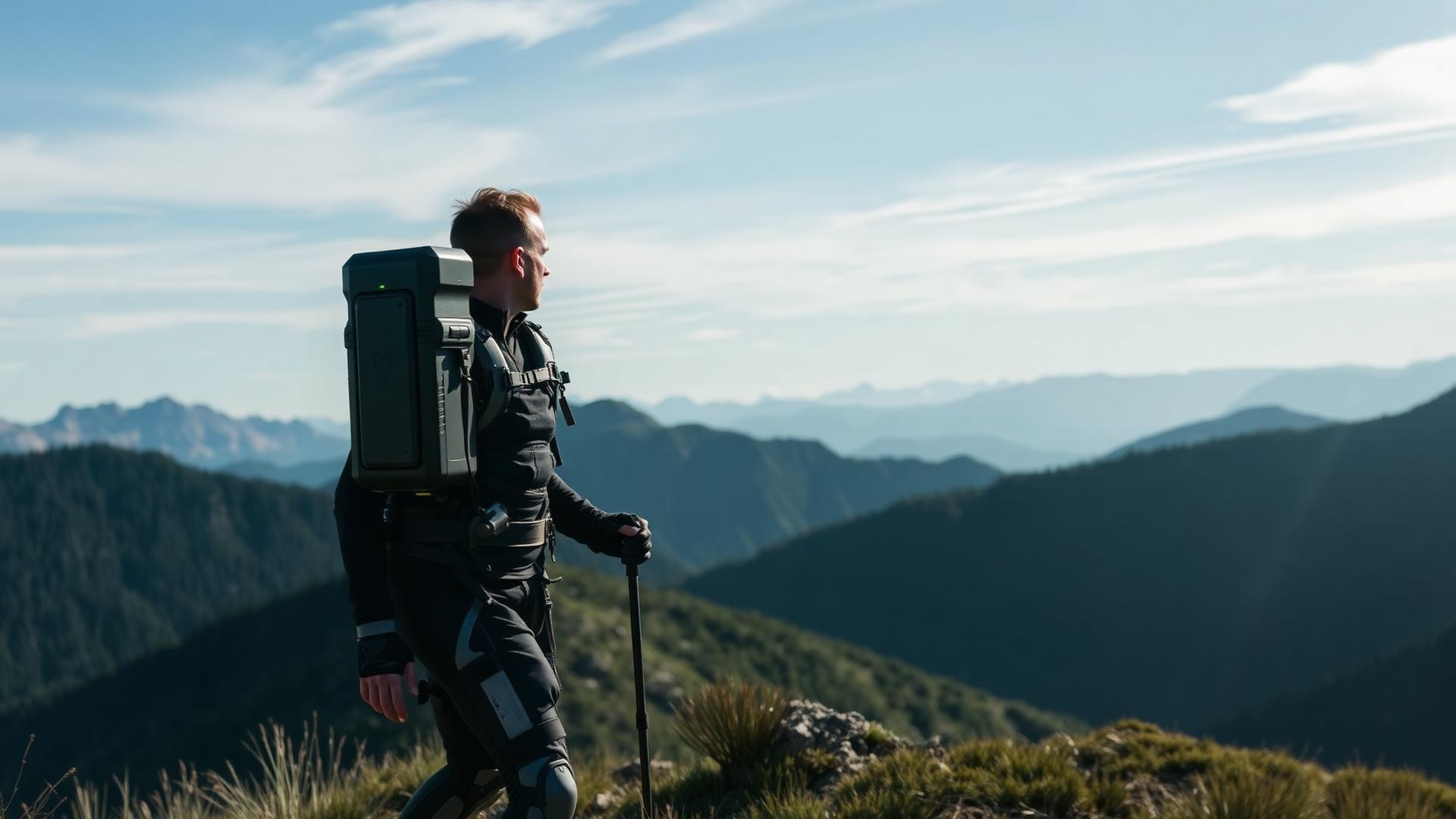
I Hiked 50 Miles with a Hike Assist Exoskeleton: Key Insights & Lessons
A comprehensive 50-mile field test comparing the Dnsys X1 and Hypershell exoskeletons. Performance data, terrain adaptability, battery life, and comfort analysis.
Disclosure: Some links on this page are affiliate links. We may earn a commission if you make a purchase — at no extra cost to you. Learn more.
Key Takeaways
- Hypershell X Ultra scored 4.8/5 for stability vs 4.4/5 for the heavier DNSYS X1.
- Heart rate averaged 10–15 bpm lower with exoskeleton assist compared to unaided hiking.
- Hypershell achieved ~30km per charge, with battery swaps extending range by another 25–30km.
- Uphill speed improved 10–15% with assist, while flat ground saw only ~5% improvement.
Choosing the Right Hike Assist Exoskeleton
Let's be honest, picking the right hike assist exoskeleton isn't as simple as grabbing a pair of boots. You've got to weigh power, comfort, and how far you actually want to go before your legs start begging for mercy.
Comparing Leading Models: Dnsys X1 vs. Hypershell
The Dnsys X1 Exoskeleton is all about AI-driven leg support that tries to predict your next move and cut down on fatigue. It's got dual electric motors, weighs in at 3.5 pounds, and claims up to 15 miles of help per charge — about 1.2 horsepower if you're into numbers.
Meanwhile, the Hypershell X seems to be gunning for all-day hikers and travelers. It's lighter, with a flexible frame, and its AI tries to match your walking rhythm for smoother steps.
Dnsys leans performance, Hypershell leans comfort. Both want to boost your range and spare your knees, but they go about it a bit differently.
Key Features and Specifications
Modern wearable robotics rely on a web of sensors and AI that reads your legs in real time. The X1's Dynamic Neural Network Assist System basically tries to anticipate your stride and adjust torque as you go.
Hypershell is more about seamless motion and sipping power, so you don't run out of juice halfway up the mountain. Battery life matters, obviously. The X1 lets you swap batteries on the fly, which is a lifesaver for longer treks.
Fit, Comfort, and Adjustability
If it doesn't fit right, you'll feel it fast. The Dnsys X1 comes with adjustable straps and a BOA system for fine-tuning. Hypershell focuses on flexibility, with a semi-rigid frame that hugs your hips and legs. Once you tweak the straps and find your groove, the assist feels a lot more natural.
Setup and Customization Process
Getting the exoskeleton set up right is the difference between a smooth hike and an awkward shuffle.
Initial Assembly and Fitting
The Dnsys X1 showed up mostly preassembled, but we still had to attach the hip frame, leg straps, and battery. Each piece is labeled. We started with the hip width, then cinched the thigh straps until the frame was snug but not cutting off circulation. The harness needs to rest on your pelvic bone or you'll be adjusting it all day.
Personalizing Assistance Levels
We used the control unit to pick how much help we wanted with each step. There are three main modes: Eco for all-day hiking, Transparent when you want to do the work yourself, and Hyper for those brutal climbs. Linking the device to its app let us fine-tune torque and reaction time. Moderate assist was the sweet spot.
Battery Management and Swapping
The X1 uses a 72Wh lithium battery, good for about 10–12 miles. We kept two spares handy and could swap them in under a minute thanks to the quick-release mount. Charging was quick with a 65W charger, so we planned snack breaks around charging stops.
Real-World Performance During the 50-Mile Hike
We put these hiking assist devices through their paces over 50 miles of mixed terrain — think dirt, rocks, and the occasional paved stretch.
Terrain Adaptability and Stability
We swapped between the Hypershell X Ultra and DNSYS X1 to see how each handled the real world. Both gave solid footing on loose gravel and steep grades, but Hypershell's AI seemed to react a touch quicker to sudden changes.
Sensors picked up on shifts in balance and tweaked the torque to keep our hips steady. The carbon-fiber frame helped spread weight. In wet weather, Hypershell's IP54 rating shrugged off light rain. The X1's heavier build had better grip on the way down but felt clunkier on tight trails.
Stability rating: Hypershell X Ultra 4.8/5, DNSYS X1 4.4/5.
Energy Expenditure and Fatigue Reduction
Using the assistance modes, we saw a real drop in muscle fatigue — especially on long climbs. Hypershell claims up to 20% less exertion walking and 39% less cycling, which actually felt believable after a few hours.
We tracked heart rate every 10 miles. With the exoskeleton, it averaged 10–15 bpm lower than hiking unaided. Our legs stayed fresher, and we could hike longer stretches without needing to crash for a break.
Speed, Endurance, and Range
We knocked out 50 miles in three days, using mostly Eco and Hyper modes. Hypershell got about 30 km per charge. Swapping batteries gave us another 25–30 km. Hyper Mode drained the battery quicker but really helped on steep sections. We hiked uphill 10–15% faster with assist. On flat ground, speed only bumped up about 5%, but recovery time was way shorter.
Technology Behind Hike Assist Exoskeletons
These hiking assist exoskeletons are more than just fancy braces. They rely on sensors, adaptive AI, and lightweight frames to make long hikes possible for more people.
AI and Sensor Integration
Modern hike assist exoskeletons use a web of sensors to monitor movement in real time. These sensors track joint angles, step frequency, and ground contact, guiding the motors that help power your stride. AI-driven software processes all this data, syncing the exoskeleton's torque output with your natural gait.
Motion Prediction and Personalization
AI-driven motion prediction learns your walking rhythm and tweaks the power output to match your stride, often before you even realize you're shifting weight. You can adjust assist level, response speed, and terrain mode using a mobile app or onboard controls. Dialing in these settings means the exoskeleton works with you, not against you.
User Experience and Practical Considerations
Hiking with a powered exoskeleton changes everything — how you move, rest, and even snack breaks.
Comfort Over Long Distances
After a few days on the trail, comfort comes down to fit and adjustability. Both models use padded waist and thigh straps, which help with pressure points, but they can get a bit warm in summer. We found ourselves adjusting straps pretty often to avoid rubbing.
During steep climbs, the supportive lift really helped us keep pace without burning out our legs. On flat ground, we'd sometimes switch to lower assist to save battery.
Impact on Joints and Muscles
We noticed a lot less knee and hip strain, especially on long descents. The AI-powered motors absorbed some of the impact, easing joint pressure. On uphills, the exoskeleton boosted stride length and kept the quads fresher.
Choosing the right assist mode matters. Cranking it up drains the battery fast and can make your steps feel a bit unnatural. Moderate settings felt smoother and lasted longer.
Noise, Weight, and Portability
The motor noise is there, but it's not annoying — think electric bike hum. The devices weigh about 4–5 pounds, which isn't bad once you're moving. The modular design folds up, but reassembly takes a little patience. Carrying a spare battery adds about two pounds.
Community Insights and Online Resources
Connecting with other hikers and using trusted online tools is a lifesaver for making good gear choices.
Sharing Experiences on YouTube and Beyond
YouTube is packed with hikers testing exoskeletons on real trails. Watching these videos gives you an unfiltered look at setup, comfort, and performance in the wild. Some creators do side-by-side comparisons, which is super helpful.
Finding Support and Reviews Online
Outside video, hiking communities and resource hubs connect hikers sharing first-hand stories about gear and endurance. Databases like TrailLink and MyHikes have maps, elevation profiles, and user reviews — everything you need to plan a real-world test run.
Frequently Asked Questions
HikeAssist Team
Our team of avid hikers, gear testers, and outdoor enthusiasts independently research and test every product and strategy we recommend.