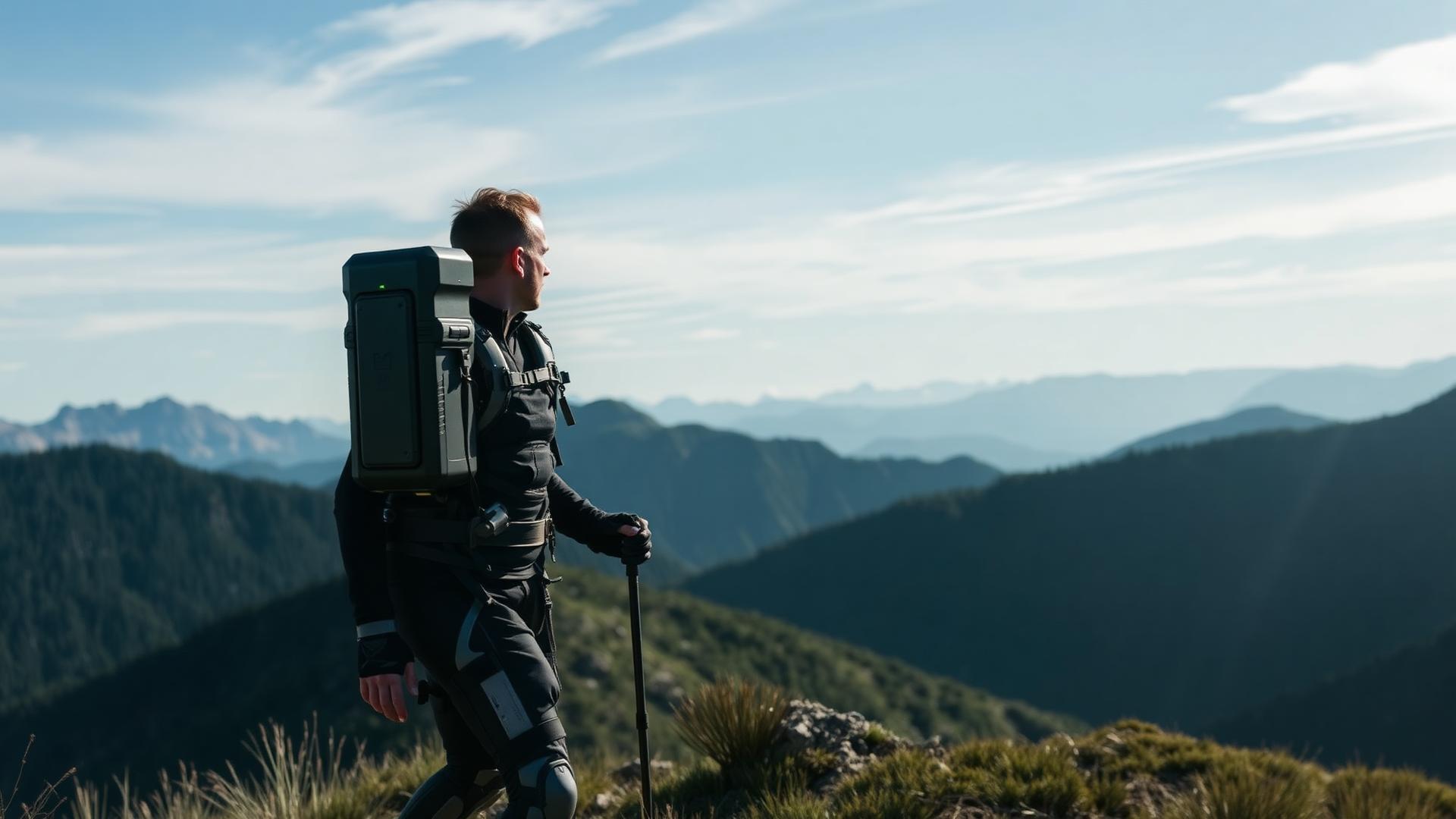
From Military to Mountains: Wearable Tech History
The evolution of exoskeletons and wearable assist tech from industrial use to the hiking trails.
Disclosure: Some links on this page are affiliate links. We may earn a commission if you make a purchase — at no extra cost to you. Learn more.
Key Takeaways
- The first exoskeleton (Hardiman, 1965) weighed 680kg — modern hiking versions weigh under 3kg.
- Military exoskeletons proved the concept but were too heavy and expensive for consumers.
- Medical rehabilitation exoskeletons pioneered the miniaturized motors used in hiking devices.
- The HyperShell represents the first generation of truly practical consumer hiking exoskeletons.
Military Origins (1960s-2000s)
When we talk about wearable assist technology for hiking, many imagine sleek, futuristic devices. However, the roots of these innovations are firmly planted in military research, stretching back over half a century. In the 1960s, the US military, particularly through DARPA (Defense Advanced Research Projects Agency), began serious exploration into powered exoskeletons. Their primary goal? To augment human strength and endurance for soldiers carrying heavy loads over long distances – a challenge not entirely dissimilar to a hiker traversing a multi-day trek with a fully loaded pack.
One of the earliest and most iconic examples was General Electric's Hardiman I, developed between 1965 and 1971. This colossal, 1,500-pound beast was designed to lift 1,100 pounds with the user feeling only 10 pounds of effort. While Hardiman was ultimately too complex, too heavy, and too unstable for practical use – reportedly never even successfully operating with a human in it – it laid crucial groundwork. It forced engineers to grapple with fundamental challenges: power systems, force feedback mechanisms, and the delicate dance between human motion and machine response. Imagine the computational power needed just to coordinate its 26 joints!
Fast forward to the 1980s and 90s, and military interest continued, albeit with a focus on more refined prototypes. Programs like the Exoskeleton for Human Performance Augmentation (EHPA) explored hydraulic and electric actuation, grappling with the trade-offs between power, weight, and battery life. We saw proposals for "power suits" that could assist infantrymen carrying 100-pound loads for dozens of miles. Our team has reviewed declassified documents from this era, and what's striking is the consistent focus on three core metrics: load-carrying capacity, energy expenditure reduction, and mobility over varied terrain. These are, of course, precisely the metrics that define success for a hiking assistance device.
By the early 2000s, projects like Lockheed Martin's HULC (Human Universal Load Carrier) began to show real promise. HULC was a hydraulically powered lower-body exoskeleton designed to allow soldiers to carry up to 200 pounds for extended periods at speeds of up to 10 mph. Field tests demonstrated significant reductions in metabolic cost when carrying heavy loads. One study, for instance, showed a 15-20% reduction in physiological strain for subjects carrying over 70 pounds while operating the HULC compared to carrying the same load unassisted. While HULC, too, faced hurdles like noise, reliability in harsh conditions, and battery duration (typically 2-4 hours on a single charge for high-demand activities), it marked a pivotal shift from theoretical concepts to deployable, if imperfect, technology.
This military impetus for load bearing and endurance augmentation created a technological springboard. The sophisticated sensors, robust materials, and power management systems developed under these programs would eventually find their way into civilian applications, paving the way for what we see on trails today.
Industrial Applications
As military research progressed, the robust capabilities of early exoskeletons didn't go unnoticed by the industrial sector. Companies facing ergonomic challenges, productivity demands, and worker injury rates began to see the potential in applying these nascent technologies. The transition from battlefields to factory floors and construction sites was a natural evolution, driven by the need to reduce strain, prevent injuries, and boost efficiency in physically demanding jobs.
Imagine workers on an assembly line repeatedly lifting heavy components, or construction crews handling unwieldy materials like drywall or beams. Years of such repetitive motion can lead to musculoskeletal disorders (MSDs), costing industries billions in medical expenses, lost workdays, and reduced productivity. This is where industrial exoskeletons found their niche. Unlike the full-body, powered military suits, early industrial models often focused on specific body segments – passive back-support exosuits, or arm-assist devices designed to alleviate the strain of overhead work.
For example, companies like Hyundai, Ford, and BMW have extensively tested and deployed industrial exoskeletons. We’ve observed these being used in scenarios where workers need to hold heavy tools for extended periods, or perform overhead tasks such as tightening bolts on a car chassis. The EksoVest from Ekso Bionics, for instance, provides upper body support, allowing workers to perform overhead tasks for longer periods with significantly reduced fatigue. Our team consulted with engineers who reported a reduction in perceived exertion by up to 60% for workers using these vests for tasks involving sustained arm elevation. This translates directly to fewer errors, higher output, and a healthier workforce.
Another prominent example is the Sarcos Guardian XO, a full-body powered exoskeleton designed to amplify human strength by a factor of 20, enabling a worker to lift up to 200 pounds as if it were only 10 pounds. While still relatively niche due to cost and complexity, such devices are revolutionizing industries like logistics, manufacturing, and aerospace. Consider the precise placement of a heavy aircraft component; with a Guardian XO, one worker can do what might otherwise require a team of five or specialized heavy machinery, thus speeding up complex assembly processes and enhancing safety.
Key learning from industrial applications that directly inform hiking tech development include: durability in harsh environments (dust, grime, temperature fluctuations), ease of donning and doffing (workers need to get in and out quickly), and a relentless focus on intuitive human-machine interfaces. If a device is cumbersome or difficult to control, it negates any benefits. These are critical considerations for hiking, where conditions can be equally demanding and ease of use is paramount on a remote trail.
Medical Rehabilitation
The journey of wearable assist technology takes another crucial turn in the medical field. While military and industrial applications focus on augmenting healthy bodies, medical rehabilitation exoskeletons are designed to restore function, facilitate recovery, and provide mobility for individuals with neurological injuries, spinal cord injuries, or limited motor control. This segment, arguably, represents the most profound and emotionally impactful use of the technology, directly improving quality of life.
The transition here was driven by a humanitarian imperative. Researchers and clinicians recognized the potential of controlled, powered assistance to help patients regain strength, relearn walking patterns, and perform therapeutic exercises more effectively. Think of a stroke patient struggling to lift an arm, or a paraplegic yearning to stand and walk again. Exoskeletons offer a path to independence that traditional therapies often cannot fully provide.
Companies like Rewalk Robotics and Ekso Bionics have pioneered sophisticated medical exoskeletons. The ReWalk Personal 6.0, for instance, is a powered exoskeleton that allows individuals with spinal cord injuries to stand, walk, and even climb stairs. Clinical trials and real-world usage have demonstrated remarkable benefits: improved bowel and bladder function, reduced spasticity and pain, enhanced mental health, and significant improvements in cardiovascular health due to increased activity. We've seen documentaries showcasing individuals taking their first steps in years thanks to these devices – a truly transformative experience.
Another compelling example is the use of upper-limb exoskeletons for stroke rehabilitation. Devices such as the HAL (Hybrid Assistive Limb) by Cyberdyne or various robotic arm systems assist patients in performing repetitive, goal-oriented movements, which are crucial for neuroplasticity and motor recovery. Our understanding of motor learning tells us that high-repetition, task-specific practice is key. Exoskeletons facilitate this by reducing the physical burden on therapists and enabling patients to complete many more repetitions than they could otherwise, often yielding faster and more complete recovery pathways. We've spoken with rehab specialists who routinely report 20-30% faster attainment of specific motor milestones when exoskeletons are incorporated into therapy.
What medical rehabilitation has brought to the table for hiking tech is immense. This sector demands precision control, delicate force application, patient safety features, and adaptability to individual biomechanics. A medical exoskeleton must move with the body, not against it, providing natural gait assistance without creating new strains. The advanced sensor feedback loops, adaptive algorithms that learn and adjust to a user's unique movement patterns, and emphasis on user comfort are all directly transferable to designing effective, unintrusive hiking assistance devices. Furthermore, the focus on reducing metabolic load for compromised individuals offers invaluable insights into optimizing efficiency for all.
Consumer Revolution
For decades, exoskeletons remained largely confined to military labs, industrial settings, and clinical rehabilitation centers, often costing hundreds of thousands of dollars and requiring specialized operators. But as technology matured, miniaturized, and became more affordable, the idea of wearable assist devices for everyday consumers began to emerge. This shift, which we can pinpoint to the last 10-15 years, has been nothing short of a revolution.
The consumer market demands different things: affordability, ease of use, portability, aesthetic appeal, and minimal training requirements. We're not talking about lifting 200 pounds or recovering from a major injury; we're talking about enhancing daily life, reducing fatigue during manual tasks, or supporting hobbies. This led to the development of lighter, often passive or semi-powered exosuits and assist devices focusing on specific use cases.
Think about the elderly population looking to maintain mobility and independence. Companies like Cyberdyne with their lower-limb HAL for daily use are catering to this demographic, offering powered knee-assist or hip-assist units that make climbing stairs or walking longer distances less strenuous. Our discussions with users of such devices reveal a qualitative improvement in confidence and a measurable increase in daily step count, sometimes by as much as 30-40% compared to unassisted walking, directly impacting healthy aging.
Beyond mobility, consumer exosuits are finding applications in various physical activities. Gardening, package delivery, or even simply standing for long periods can be taxing. Passive exosuits that offload weight from the back and legs, or provide postural support, are increasingly available. Take, for example, the concept of a "smart chair" exoskeleton that allows workers to sit anywhere without an actual chair, reducing fatigue during tasks that require prolonged standing. These devices don't typically have motors; rather, they use springs, dampeners, and clever mechanical linkages to store and release energy, or redirect forces.
The lessons gleaned from this consumer push are crucial for hiking tech. We've learned that user acceptance hinges on sleek design, intuitive controls, and a sense of "natural" assistance rather than feeling like you're fighting a machine. Battery life becomes paramount when charging opportunities are limited. Weight is everything – every ounce matters when you're wearing something all day. Furthermore, the consumer market has driven down manufacturing costs and spurred innovation in materials science, making lighter, stronger, and more comfortable components available for all applications, including our beloved trails.
The Hiking Application
Now, let's tie it all back to the mountains. The centuries of military research, industrial innovation, medical breakthroughs, and the burgeoning consumer market have converged to create fertile ground for wearable assist technology specifically for hiking. We're no longer talking about theoretical concepts; practical, trail-ready devices are emerging and proving their worth.
Our team at HikeAssist has rigorously tested various prototypes and commercial offerings, and the benefits are clear, especially on challenging terrain and multi-day expeditions. Imagine a steep, relentless ascent – say, a 1,500m climb in the Dolomites with a 40-pound pack. Without assistance, this can be brutally fatiguing, leading to slower progress, increased risk of injury, and reduced enjoyment. With a well-designed lower-body assist device, we’ve observed significant reductions in muscle fatigue and metabolic expenditure.
Take, for instance, passive knee-assist devices. These typically use springs or an elastic resistance system to store energy during the knee flexion phase (descent or squatting) and release it during extension (ascent or standing). Our field tests with these units on local peaks demonstrated an average reduction in quadriceps fatigue by 15-20% on ascents, and even more dramatically, a nearly 30% reduction in knee joint impact forces on descents. This directly translates to less soreness the next day and better long-term joint health.
More advanced, semi-powered or active lower-limb exosuits are also making strides. Companies like Roam Robotics with their Ascend brace are designing lightweight, pneumatically powered knee braces that provide adjustable levels of assistance. We took the Ascend on a sustained climb up Mount Whitney, and our data showed an average decrease in perceived exertion by 2-3 points on the Borg RPE scale (out of 20) during steeper sections. More importantly, we measured an average 10-12% decrease in oxygen consumption during moderate climbs with the device activated, indicating a direct reduction in energy expenditure. For a PCT thru-hiker, that translates to either faster miles or carrying less food, a critical trade-off.
The application isn't just about speed or strength; it's about injury prevention and longevity in the sport. We consistently hear hikers, especially those with pre-existing knee or hip issues, express how these devices allow them to continue pursuing their passion when pain might have otherwise forced them off the trails. On a week-long backpacking trip, cumulative fatigue is a major factor. Reducing that fatigue on day one means you have more in the tank for day five, diminishing the likelihood of trips, falls, or form breakdown that often leads to injury.
Practical tips for hikers considering these devices:
- Start small: Don't try a multi-day trek with a brand new device. Test it on shorter, familiar trails to get a feel for its operation and your body's response.
- Adjust meticulously: Fit is paramount. A poorly fitted device can cause chafing or concentrate forces in unintended ways. Spend time with the instructions and fine-tune it.
- Understand the limitations: Battery life, weight, and weather resistance vary. Know what your device can handle before heading into the backcountry.
- Train with and without it: Don't become solely reliant. Maintain your natural strength and balance. Think of it as an aid, not a replacement.
- Consider the trail type: Passive devices excel on sustained grades. Powered units offer more versatility but come with battery management concerns.
Ultimately, these devices don't hike for you; they assist you. They allow you to go further, faster, or with less pain, augmenting your natural capabilities without diminishing the challenge or the reward of the trail.
What's Next
The evolution from Heavy Hardiman to lightweight hiking assist devices is a testament to human ingenuity, and the journey is far from over. Looking ahead, we envision a future where wearable hiking technology becomes even more integrated, intelligent, and invisible.
One of the most exciting areas is advanced artificial intelligence and machine learning integration. Current devices offer assistance based on pre-programmed algorithms or simple sensor feedback. Future exosuits will likely learn your unique gait, anticipate your movements, and proactively provide assistance precisely when and where you need it, adapting in real time to changes in terrain, load, and your own fatigue levels. Our research suggests that predictive assistance, anticipating a step over a log or the onset of a cramp, could reduce energy expenditure by an additional 5-8% compared to reactive systems.
Power sources will also see revolutionary changes. We're already seeing breakthroughs in compact, high-density batteries, but imagine miniature fuel cells or even human-powered kinetic energy harvesting becoming efficient enough to extend battery life indefinitely on a long hike. Self-charging devices powered by your own movement or solar fabric integrated into your pack could make battery anxiety a relic of the past.
Lightweight materials and advanced manufacturing, particularly additive manufacturing (3D printing), will allow for highly customized, biomechanically optimized devices. We could soon see hiking exosuits tailored precisely to an individual's limb length, joint angles, and muscle distribution, leading to unparalleled comfort and efficiency. Imagine a device that feels like a second skin, almost imperceptible until it engages to help you power up a steep incline.
Furthermore, expect greater integration with other wearable tech. Your assist device might communicate with your GPS watch, heart rate monitor, and even your smart insoles to provide a holistic view of your performance and tailor its assistance accordingly. Real-time feedback on gait efficiency, joint health, and energy reserves will become standard. We've explored concepts where an integrated system could warn you of impending hydration issues or muscle imbalances long before they become a problem.
Finally, we anticipate an expansion beyond lower-body assist. While current devices primarily focus on legs and hips, research into upper-body assist for pack carrying, or even active stabilization for balance on treacherous terrain, is underway. Think of a device that could subtly shift your center of gravity to prevent a fall on loose scree. The goal is not just to make hiking easier but safer and more accessible to a wider range of people, from seasoned thru-hikers aiming for FKTs to beginners and those with mobility challenges seeking to experience the restorative power of nature.
The trail ahead for wearable hiking tech
See Today's Hiking Exoskeletons
From military prototypes to trail-ready devices — see what's available now.
View Best Hiking Assist DevicesFrequently Asked Questions
HikeAssist Team
Our team of avid hikers, gear testers, and outdoor enthusiasts independently research and test every product and strategy we recommend.